Transurethral resection of the prostate (TURP) is a procedure frequently used to treat moderate to severe BPH. It was one of the most common major surgeries performed on men age 65 and older but is rapidly being replaced by laser prostatectomy and other less invasive procedures.
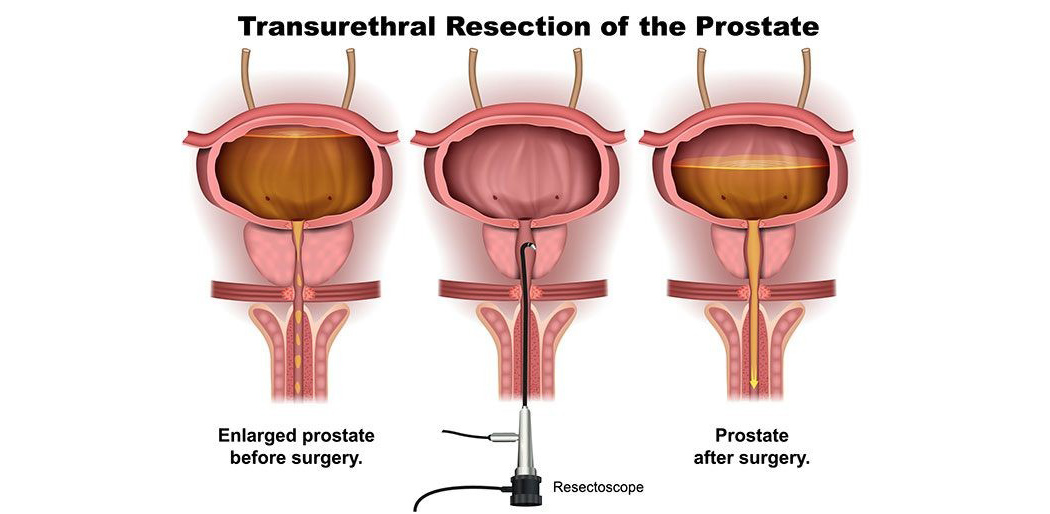
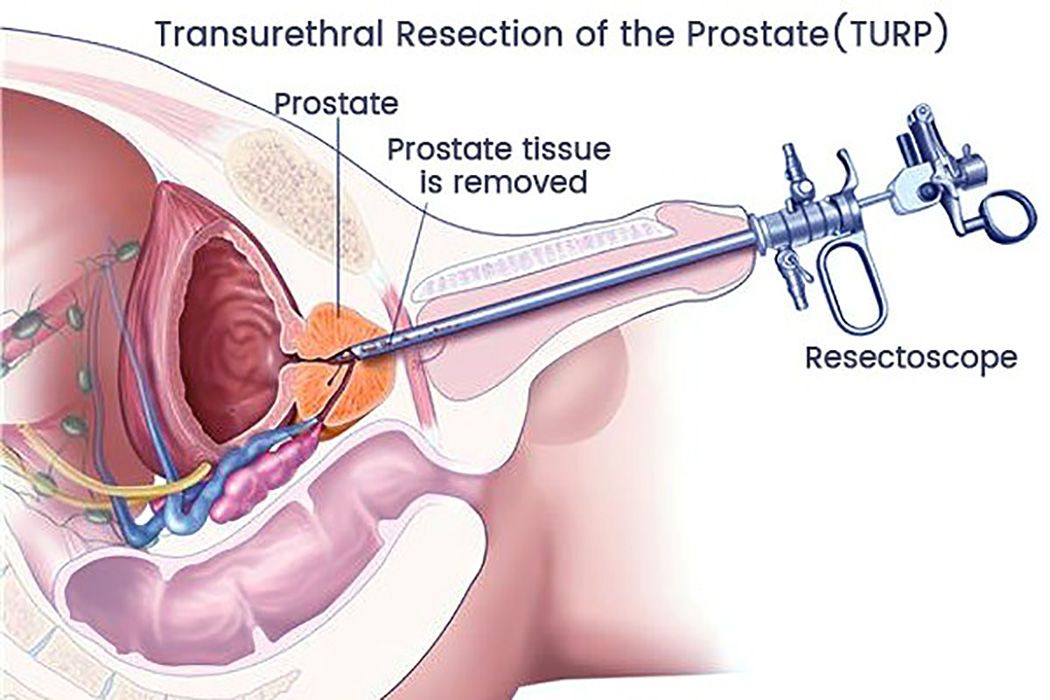
After you're given a spinal or general anesthetic, an instrument called a resect scope is inserted into your urethra through your penis.
During the 60 to 90 minute operation, your surgeon uses the scope's wire loop to remove obstructing tissue one piece at a time from the inside of your gland, creating a cavity. Only the interior part of your gland is removed. This tissue is carried by the irrigating fluid into the bladder, and then flushed out at the end of the operation. Expect some blood or small blood clots in your urine afterward. You'll probably need a urinary catheter for a few days. At first, you may have painful urination or a sense of urgency as urine passes over the surgical area. This gradually improves over one to four weeks. You can go back to office work in about two weeks and back to manual labor in four to six weeks. You can resume sexual activity in four to six weeks.
TURP greatly relieves lower urinary tract symptoms in nearly all men. It produces the greatest symptom relief in men who have larger prostate glands and more troublesome symptoms. Even men with severe bladder damage caused by BPH often improve after TURP.
TURP relieves symptoms quickly. Most men experience a stronger urine flow within a few days.
TURP can cause excessive bleeding, although this is rare with modern surgical techniques. Frequent urge to urinate is common during the early recovery period, but is rare long term with about the same frequency as occurs in men who choose watchful waiting.
TURP syndrome occurs when your bloodstream absorbs too much of the irrigating solution, causing abnormally low concentrations of sodium in your blood. It rarely occurs anymore due to current surgical techniques and is readily treated.
Prolonged side effects of TURP may include:
- Semen entering your bladder (retrograde ejaculation)
- Erection problems
- painful urination
- Recurring urinary tract infections
- Bladder neck narrowing (stricture)
- Blood in your urine (hematuria)
Later treatment after TURP is uncommon and significantly less likely, compared with minimally invasive treatments. Some men may need a second surgery after a number of years. A few men require re-treatment because their prostate gland regrows or because not enough of it is removed the first time. Newer Tequniqes like HOLAP, HOLEP, HOLRP are more effective & durable.
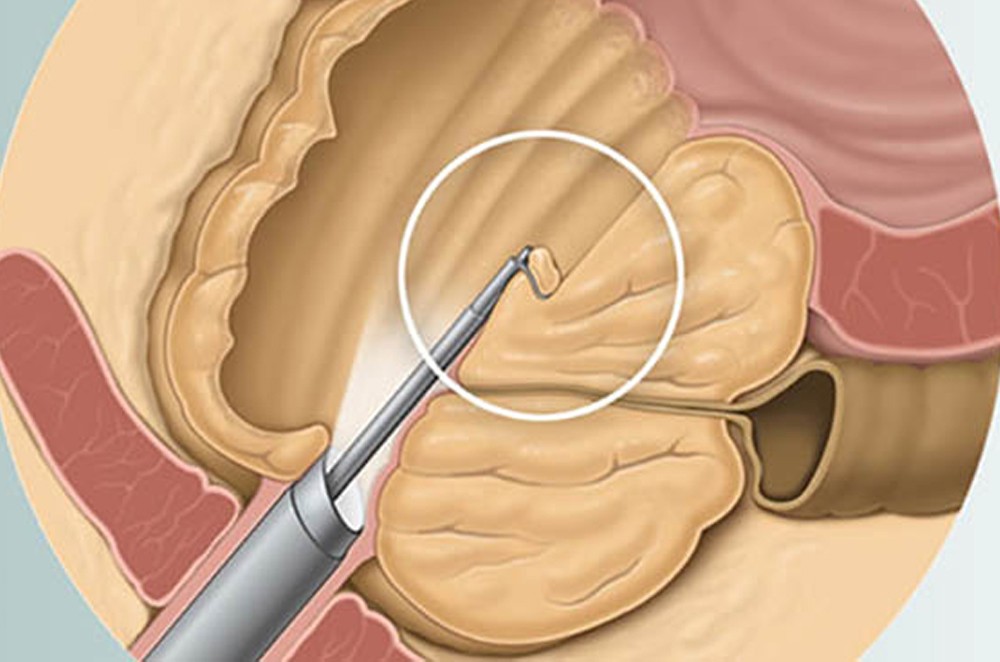
Holmium Laser Enucleation of the Prostate (HoLEP)
© 2025 Om Kidney Hospital. All Rights Reserved. Designed & Developed By: Desiration Hub.

 Appointment