Prostate cancer starts in the prostate gland, part of the male reproductive system. It usually grows slowly, and many people don't need treatment right away. But some types can spread quickly and are harder to treat. Early diagnosis improves the chances of long-term survival.
Prostate cancer is cancer that develops in the prostate, a small, walnut-shaped gland located below the bladder and in front of the rectum in males. This tiny gland secretes fluid that mixes with semen, keeping sperm healthy for conception and pregnancy.
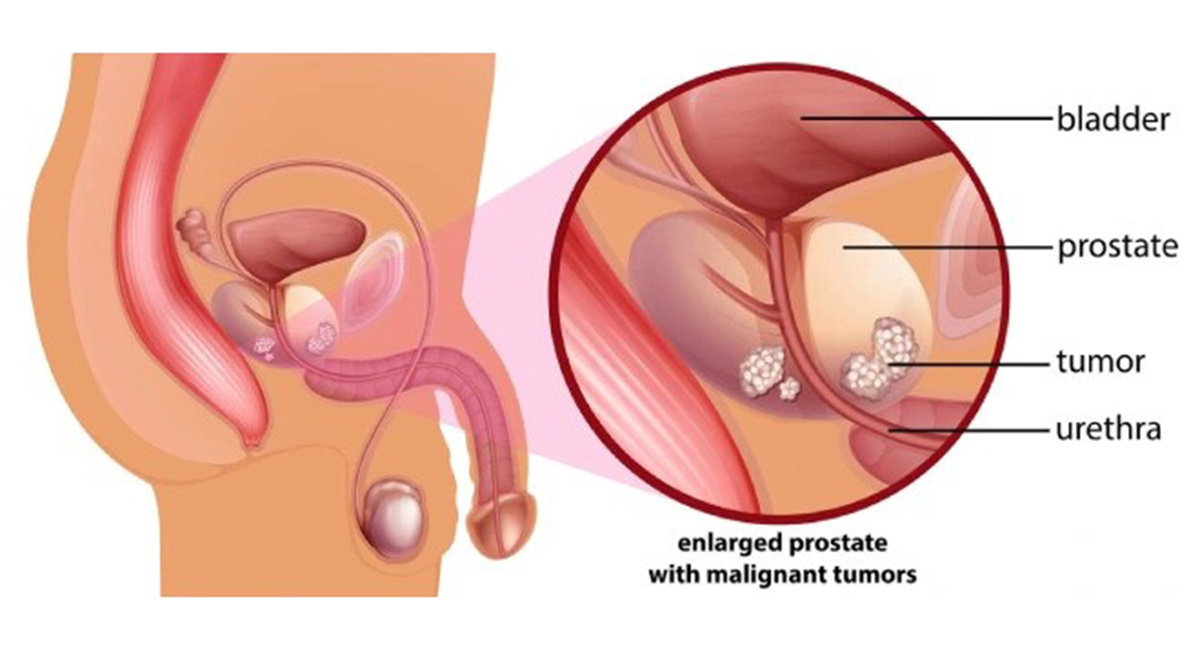
Prostate cancer is a serious disease. And it's common. For every 100 males, 13 will develop prostate cancer at some point in their lives. Fortunately, most people get diagnosed before it spreads beyond their prostate glands. Treatment at this stage often eliminates the cancer. Still, approximately 35,770 people in the United States die from prostate cancer each year.
If you’re diagnosed with prostate cancer, it’s most likely an Adenocarcinoma. Adenocarcinomas start in the cells of glands that secrete fluid, like your prostate. Rarely, prostate cancer forms from other types of cells.
- Small cell carcinomas
- Transitional cell carcinomas
- Neuroendocrine tumors
- Sarcomas
- About 95% of prostate cancers.
- Develops from the glandular cells of the prostate that produce prostate fluid.
Subtypes include:
- Acinar adenocarcinoma (most common).
- Ductal adenocarcinoma (more aggressive and rarer).
- A rare and aggressive type of prostate cancer.
- Belongs to neuroendocrine tumors.
- Spreads quickly and may not raise PSA levels, making it harder to detect early.
- Arises from the flat cells covering the prostate.
- Extremely rare and typically more aggressive than adenocarcinoma.
- Does not usually produce PSA.
- Begins in the urethra or bladder and spreads to the prostate.
- Rare and often treated more like bladder cancer than traditional prostate cancer.
- Includes leiomyosarcoma, rhabdomyosarcoma, etc.
- Very rare and typically found in younger men.
- Originate in muscle or connective tissue of the prostate, not glandular tissue.
| Type | Commonness | Aggressiveness | PSA Level | Origin |
|---|---|---|---|---|
| Adenocarcinoma | Very High | Varies | Elevated | Gland Cells of the Prostate |
| Small Cell Carcinoma | Rare | High | Normal or Low | Neuroendocrine Cells |
| Squamous Cell Carcinoma | Very Rare | High | Normal | Flat Lining Cells |
| Transitional Cell Carcinoma | Rare | Moderate | Normal / Elevated | Bladder / Urethral Lining |
| Sarcomas | Extremely Rare | High | Variable | Muscle / Connective Tissue |
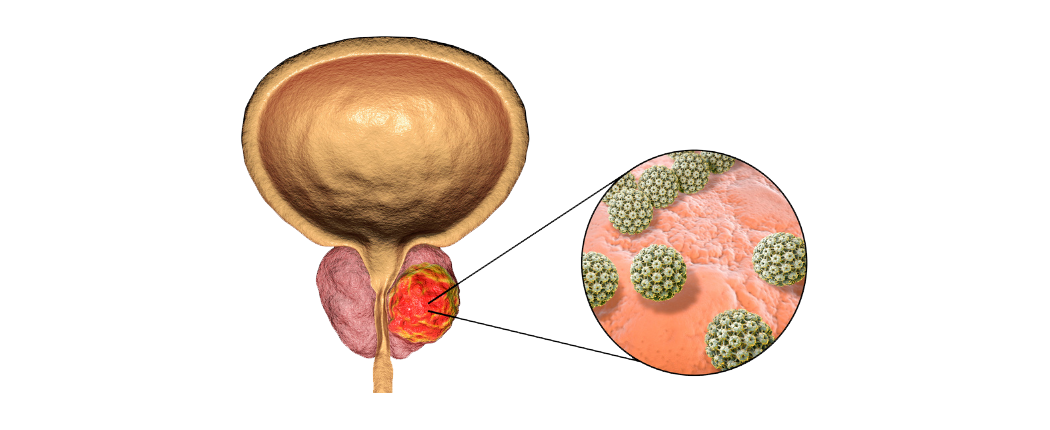
Doctors use screening tests, physical exams, scans and, sometimes, a biopsy to diagnose prostate cancer. Most people start screening at age 55, or earlier if they're at a higher risk. Screening usually stops after age 70. If the results show something unusual, you may need more tests. But if your doctor thinks the tumor is slow-growing and not likely to cause problems, they may wait before doing more tests. Faster-growing cancers or those that have spread outside the prostate usually need a biopsy to confirm the diagnosis.
Screening tests can show whether you have signs of prostate cancer that require more testing:
Digital rectal exam: Your provider inserts a gloved, lubricated finger into your rectum and feels your prostate gland. Bumps or hard areas may mean cancer.
Prostate-specific antigen (PSA) blood test: The prostate gland makes a protein called prostate-specific antigen (PSA). High PSA levels may indicate cancer. Levels also rise if you have benign conditions, such as benign prostate hyperplasia or prostatitis.
Imaging: An MRI or a transrectal ultrasound can show images of your prostate gland, including suspicious areas that may be cancerous. Imaging results can help your provider decide whether to perform a biopsy.
Biopsy: During a needle biopsy, a healthcare provider removes a tissue sample to check for cancer. This is the only way to confirm prostate cancer and know how aggressive it is. Genetic testing of the sample may help guide treatment.
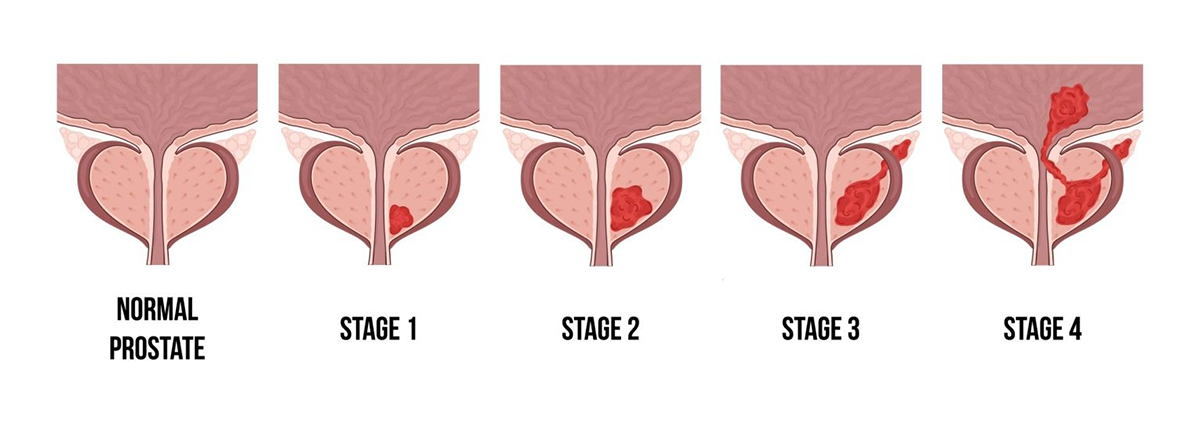
Healthcare providers use the Gleason score and cancer staging to determine how serious the cancer is and the types of treatments you need.
The Gleason score allows your provider to rate how abnormal your cancer cells are. The more abnormal cells you have, the higher your Gleason score. The Gleason score allows your provider to determine the grade of your cancer, or its potential to be aggressive.
Cancer staging allows your provider to determine how advanced your cancer is, or how much it's spread. Cancer may be in your prostate gland only (local), invading nearby structures (regional) or spreading to other organs (metastasized). Prostate cancer most commonly spreads to your bones and lymph nodes. It can also develop in your liver, brain, lungs and other organs.
Your treatment depends on multiple factors, including your overall condition, if the cancer’s spread and how fast it’s spreading. Depending on your treatments, you may work with various healthcare providers, including urologists, radiation oncologists and medical oncologists. Most prostate cancers diagnosed in the early stages can be cured with treatment.
© 2025 Om Kidney Hospital. All Rights Reserved. Designed & Developed By: Desiration Hub.

 Appointment