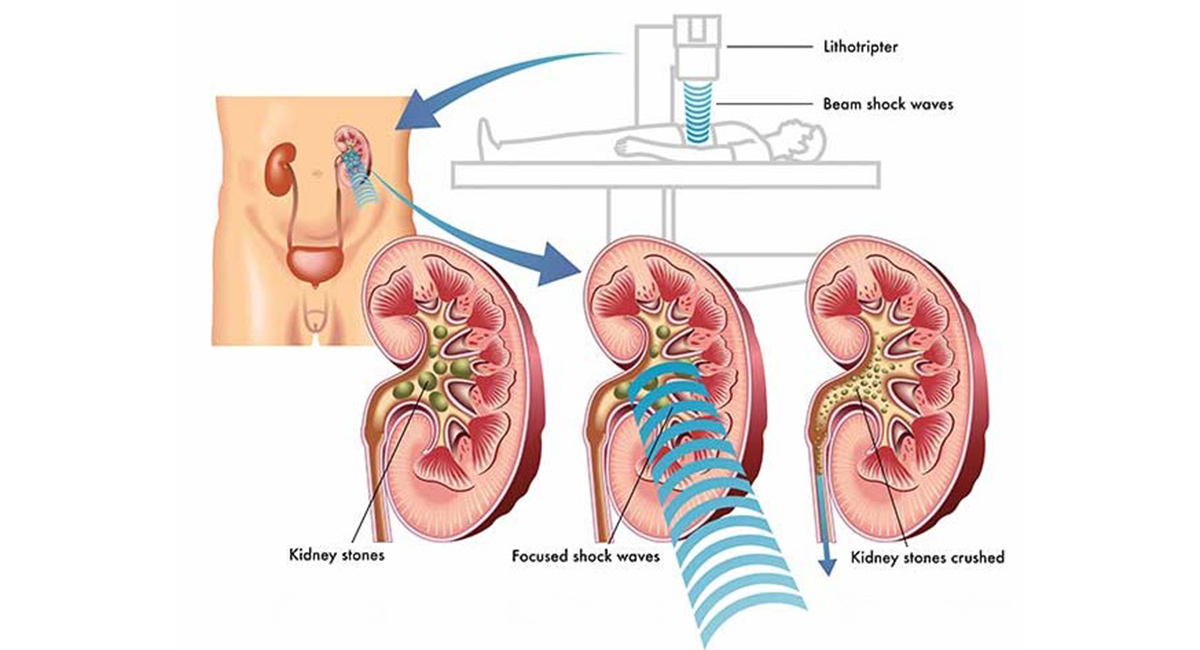
ESWL (Extracorporeal Shock Wave Lithotripsy) is a non-invasive procedure used to break kidney or ureteric stones into smaller fragments using shock waves so they can pass naturally through the urinary tract.

Kidney stones (especially <2cm)
Ureteral stones
Stones visible on X-ray (radiopaque)
Patient Positioning: Usually supine or prone on the ESWL machine table.
Localization of Stone: Using fluoroscopy or ultrasound.
High-energy shock waves generated externally.
Focused precisely on the stone using imaging guidance.
Waves pass through soft tissues and shatter the stone.
Stones break into smaller pieces over 30–60 minutes.
Fragments pass in urine over several days/weeks.
Waves pass through soft tissues and shatter the stone.
Local anesthesia or sedation
General anesthesia in some cases (especially in children or anxious adults)
KUB X-ray or CT scan
Renal function tests
Coagulation profile
Urinalysis (to rule out infection)
Hematuria (blood in urine)
Pain during passage of fragments
Steinstrasse (stone street – blockage by multiple fragments)
Infection or fever
Incomplete fragmentation (may need repeat ESWL or another modality)
Non-invasive
No incisions or scopes
Daycare procedure
Quick recovery
Pregnancy
Active urinary tract infection
Uncontrolled bleeding disorders
Aortic aneurysm near stone site
Obstruction distal to the stone
Increased fluid intake
Painkillers
Strain urine to collect stone fragments for analysis
Follow-up imaging after a few weeks
© 2025 Om Kidney Hospital. All Rights Reserved. Designed & Developed By: Desiration Hub.

 Appointment