We have treated good numbers of male infertility patients who fathered child.
We do microvaricocele surgery with good result, testicular biopsy & medical treatment for male infertility. We also do Vasectomy reversal, vasoepididymal microscopic anastomosis.
It is important to note that Infertility and Impotence are quite different entities. Failure to distinguish between the two is a needless cause of embarrassment to many men who stay away from andrology clinics because of the stigma that goes with the latter term.
To be infertile means to be unable to beget children. From the medical standpoint, a couple is considered to be infertile if there has been abercrombie no pregnancy after one to one-and-half years of unprotected sexual intercourse.
For the fertility process to proceed smoothly, both the man and the woman should be healthy and normal.
Unfortunately, this aspect of conception is not known to most people. Traditionally (and very wrongly), it is the woman who is always blamed when a couple can't have a child. The investigation for infertility begins and ends with evaluation of the wife alone. Thus, a woman is often subjected to a D&C, laparoscopy etc. only to be told at the end of abercrombie france it all that everything is normal. It is not uncommon, in fact, for a man to divorce, not one but several wives under the mistaken (and chauvinistic) belief that she alone is responsible for the 'barrenness'. Needless to say such men do not beget children even after several marriages!!
One would ordinarily imagine that in country like India, which already has a population in excess of 980 million, child-bearing should be an effortless endeavor for human beings. This, however, is not true. Quite unrelated to the national population figure is the prevalence of infertility.
Approximately 15-20 percent of all cohabiting couples are infertile. Of these, in up to 50 percent of cases it is the male factor or the husband who is responsible for the infertility.
This means that nearly 7.5 to 10 percent of all men lancel in the reproductive age group are infertile i.e. incapable of fathering children. This, by any yardstick, is a stupendous figure but one that very few know about.
It is important to note that infertility and impotence are quite different entities. Failure to discern the difference between the two is a needless cause of embarrassment to most men who stay away from andrology clinics because of the stigma that goes with the latter term.
Impotence means an inability to attain or sustain erections for satisfactory sexual intercourse.
The term has no bearing whatsoever on the fertility sac hermes status of the man. It is thus possible for a totally impotent man to be potentially fertile and it will be possible to produce a pregnancy in the wife of such a man by insemination of the husband's semen.
Infertility, on the other hand, means an inability to produce children. This usually results from the husband's semen being infertile or sub-fertile. Most infertile men are perfectly normal in terms of potency and have very satisfactory sexual relations with their partners.
Male sterility can be caused by a series of factors that we can classify into four groups:
- Pre-testicular or endocrine factor: Hormone imbalances affecting the development and/or testicular function.
- Testicular factor: Direct involvement of the testicles.
- Post-testicular factor: Problems with the ejection of sperm.
- Sperm abnormalities: Issues directly linked to the quality of the sperm produced.
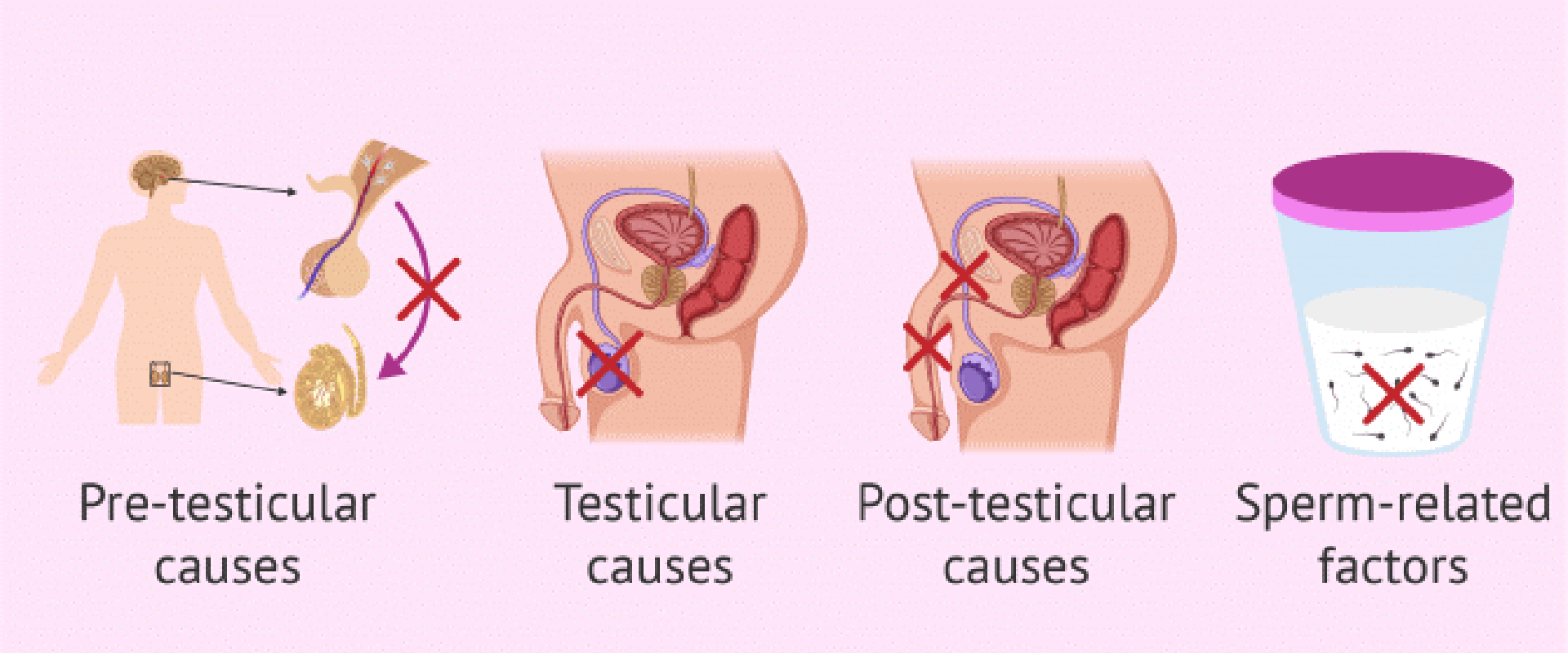
Despite the wide range of causes leading to male sterility, the quality of the ejaculated sperm is affected to some extent in each case. For a semen sample to be considered to be of good quality, it should meet certain parameters.
These include sperm concentration, sperm motility, sperm morphology, and sperm vitality.
In order to diagnose the possible cause of male sterility, it is necessary to perform some diagnostic tests, starting with a spermogram.
Below, we discuss the different types of male infertility in more detail:
This type of male infertility is caused by problems with the hormonal regulation of the spermatogenesis, in other words, the sperm production.
The hormones secreted by the pituitary gland, LH and FSH, which act on the male reproductive function, may be altered for any of the following reasons:

Unhealthy lifestyle habits
Diabetes
Hypothyroidism and hyperthyroidism
Hypogonadism hypogonadotropic
Hyperprolactinemia
These alterations can be due to congenital problems or be caused by external factors such as some substances or drugs (e.g. the use of anabolic steroids), which can affect the entire hormonal regulation system, causing fertility problems.
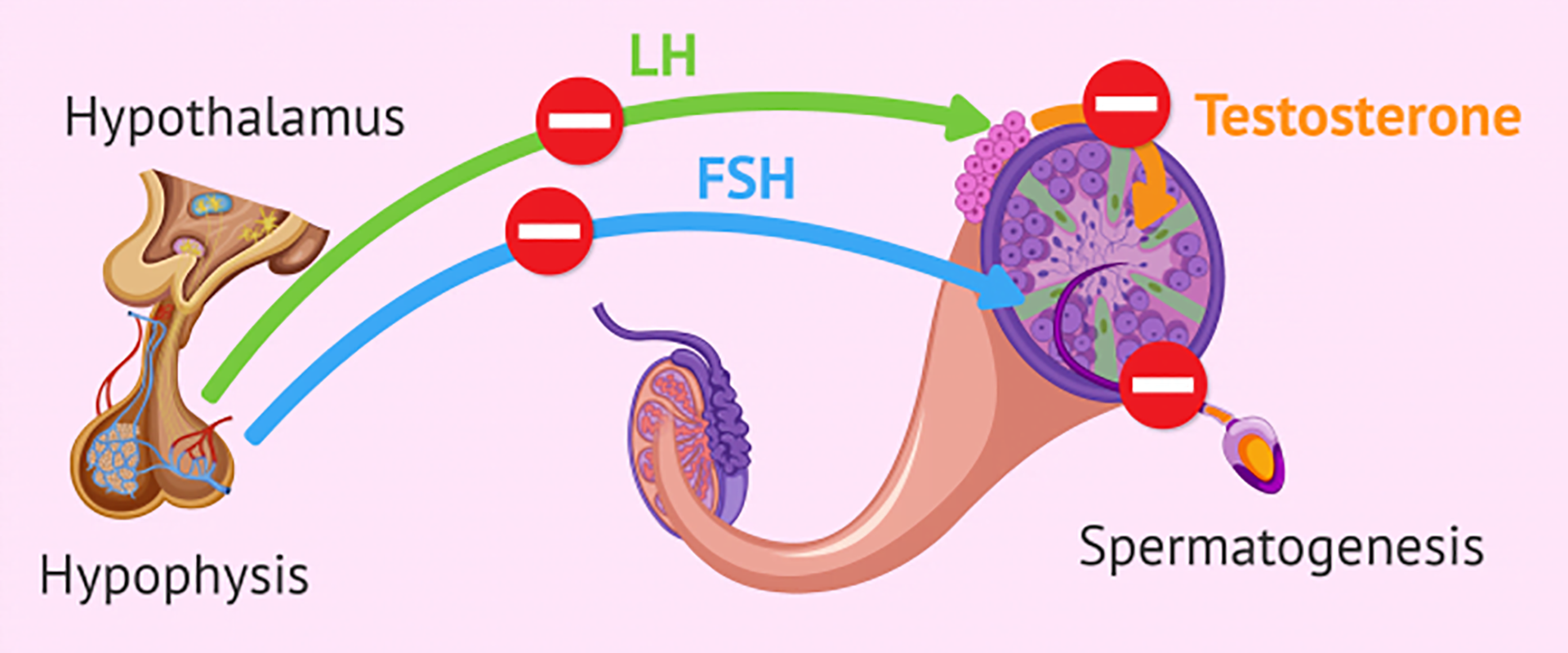
When we mention testicular causes of male infertility, we refer to any factor affecting directly the testes.
Male infertility due to a testicular factor can be congenital or acquired, that is, caused by external agents at any point in the patient's life:
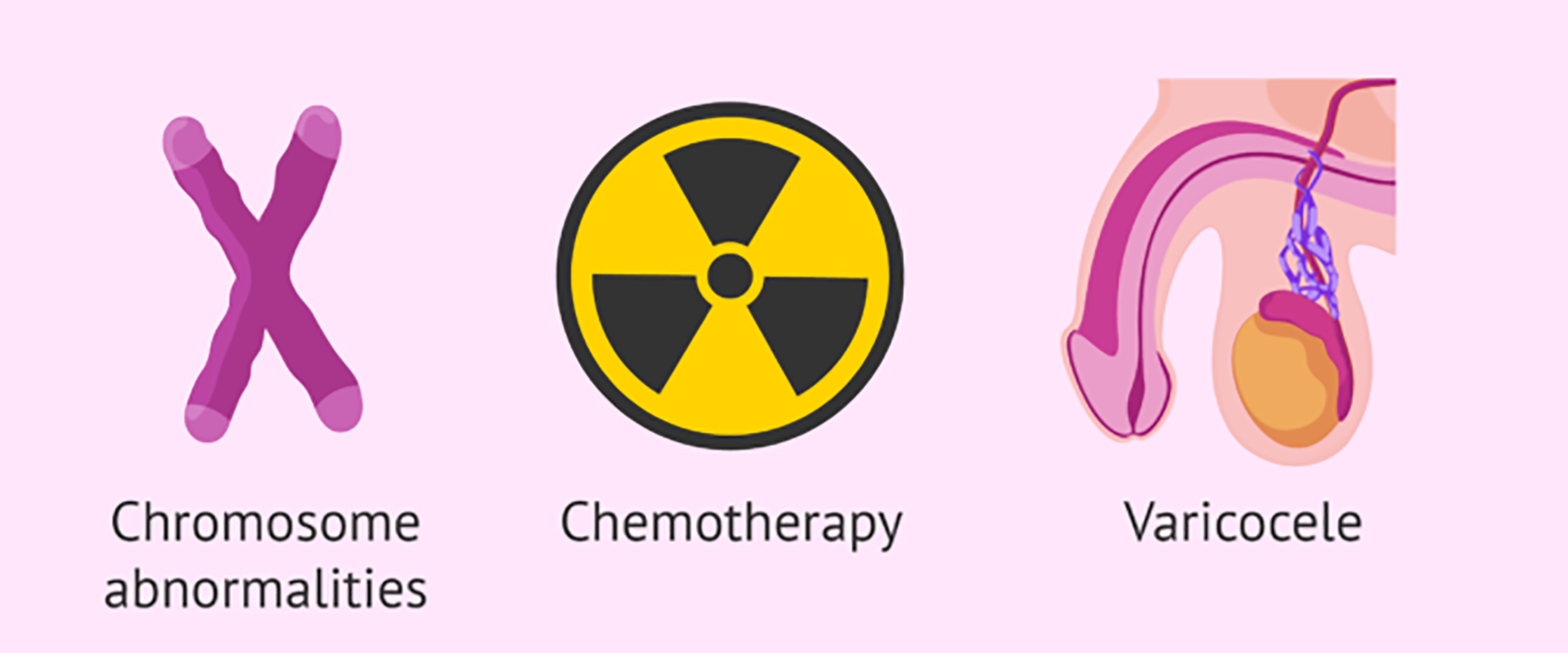
Congenital anomalies or abnormalities: caused by genetic alteration the chromosomal level (i.e. the Klinefelter Syndrome), or a faulty gene, for example in Noonan syndrome. Diseases can also be caused by defects in the genes of the male Y chromosome.
Acquired disorders: In this group, we find those problems caused as side effects or adverse reaction of certain drugs, e.g. chemotherapy, drug use, radiotherapy, trauma, infections, etc. The most known pathologies are varicocele, cryptorchidism, orchitis and hydrocele.
The post-testicular causes of male infertility are a set of complications derived either from a blockage or an abnormality in the seminal ducts.
The seminal ducts consist of the epididymis, the vas deferens and the urethra, which the sperm must travel through once they have been produced in the testicles.
There are various causes of obstruction, such as infections, trauma, anti-sperm antibodies, hypospadias or cystic fibrosis.
The inability to ejaculate is also considered a post-testicular alteration.
Sperm abnormalities are the leading cause of male infertility. This includes alterations in the sperm that directly affect their morphology, motility, vitality, or number.
In order to evaluate sperm quality, the diagnostic test of choice is a semen analysis. A sperm analysis allows the specialist to determine the presence of the following alterations:
- Oligospermia or oligozoospermia: Low sperm count.
- Asthenozoospermia: Poor sperm motility.
- Teratospermia or teratozoospermia: Large amount of sperm with an abnormal morphology.
- Necrospermia or necrozoospermia large amount of dead sperm in the ejaculate.
- Azoospermia
- Zero sperm count.
Treatment of male infertility is difficult louboutin pas cher and sometimes frustrating. Immediate results are hard to produce and persistence with therapy is required.
Medical Treatment: This consists of the administration of certain drugs to improve seminal quality. Clomiphene citrate, mesterolone, tamoxifen, gonadotropin injections, antibiotics, steroids etc. are commonly used.
Surgical Treatment: Obstructions in the sperm conduction pathway, varicocele, undescended testes etc. can be treated by operation. Modern microsurgical techniques are of great help. Even patients who have undergone a vasectomy in the past can have their vasectomy reversed and the tubes recanalized successfully using microsurgery.
Assisted Reproduction: In many cases, neither medicines nor operations are of help. In such cases, an attempt is made in the reproductive laboratory to improve semen quality and facilitate the penetration of the sperm into the ovum. This includes sperm washing/capacitation, intra-uterine insemination (IUI), gamete intra-fallopian transfer (GIFT), in vitro Fertilization (IVF), and micro-manipulation (ICSI).
Microsurgery and assisted reproduction require considerable training, skill and infrastructure.
Despite the availability of so many treatment modalities, some patients remain incurable and no treatment, cheap or expensive, can improve their fertility prospects. One then has no alternative but to recommend an AID (donor insemination) or adoption.
Awareness of the magnitude and importance of the male factor in infertility is relatively recent. Tremendous advances have been made in andrological research over the past few years. If not today, one can envisage in the conceivable future, a situation where all males (and females) with infertility can be completely cured.
© 2025 Om Kidney Hospital. All Rights Reserved. Designed & Developed By: Desiration Hub.

 Appointment