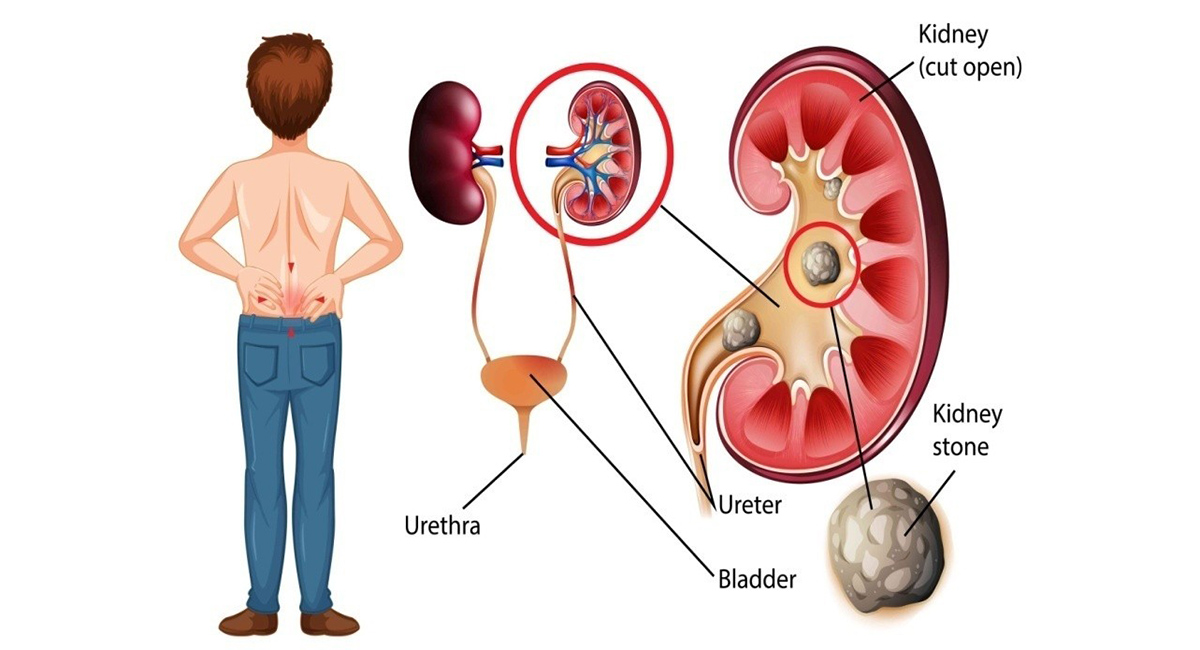
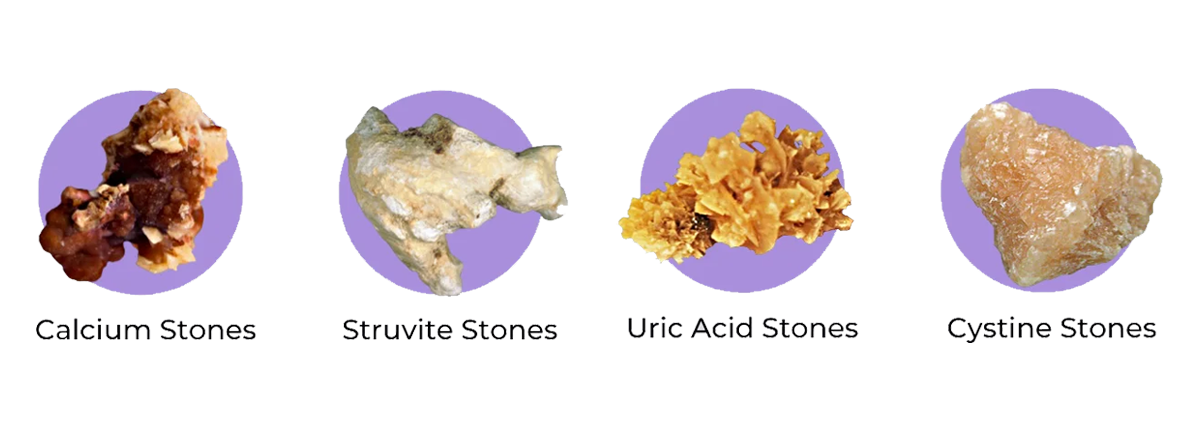
A kidney stone is a hard deposit made of minerals and salts that forms inside the kidneys. There are four types of kidney stones: calcium oxalate, uric acid, struvite, and cystine.
It can affect any part of the urinary tract from the kidneys to the bladder and often causes severe pain when passing through the urinary tract. Normally, the substances that make up kidney stones are diluted in the urine. When urine is concentrated, though, minerals may crystallize, stick together and solidify. The result is a kidney stone. Most kidney stones contain calcium. Passing kidney stones can be excruciating. The pain they cause typically starts in your side or back, just below your ribs, and radiates to your lower abdomen and groin. Common symptoms include severe pain in lower back, blood in your urine, nausea, vomiting, fever and chills, or urine that smells bad or looks cloudy.
Urine has various wastes dissolved in it. When there is too much waste in too little liquid, crystals begin to form. The crystals attract other elements and join together to form a solid that will get larger unless it is passed out of the body with the urine. Usually, these chemicals are eliminated in the urine by the body's master chemist: the kidney. In most people, having enough liquid washes them out or other chemicals in urine stop a stone from forming.
After it is formed, the stone may stay in the kidney or travel down the urinary tract into the ureter. Sometimes, tiny stones move out of the body in the urine without causing too much pain. But stones that don't move may cause a back-up of urine in the kidney, ureter, the bladder, or the urethra. This is what causes the pain.
It is important to find out what type of kidney stone you have and why it developed. Some of the underlying causes of kidney stones can be treated to prevent new stones from forming. If no specific treatment exists, you may be able to stave off additional kidney stones simply by drinking more water and making a few dietary changes.
Some kidney stones are as small as a grain of sand. Others are as large as a pebble. A few are as large as a golf ball! As a general rule, the larger the stone, the more noticeable are the symptoms.
The symptoms could be one or more of the following:
- Severe pain on either side of your lower back
- More vague pain or stomach ache that doesn't go away
- Bloody, cloudy or foul-smelling urine. Pain on urination
- Nausea and vomiting Persistent urge to urinate
- Fever and chills if an infection is present
Kidney stones that don't cause these symptoms may show up on X-rays when you seek medical care for other problems, such as blood in your urine or recurring urinary tract infections.
The kidney stone starts to hurt when it causes irritation or blockage. This builds rapidly to extreme pain. In most cases, kidney stones pass without causing damage-but usually not without causing a lot of pain. Pain relievers may be the only treatment needed for small stones. Other treatment may be needed, especially for those stones that cause lasting symptoms or other complications. In severe cases, however, surgery may be required.
About 500,000 emergency department visits each year are due to kidney stone issues. About 1 in 10 people will have a kidney stone at some point in their lives, according to the National Kidney Foundation. They are most common in men in their 40s and 50s.
Your kidneys are two bean-shaped organs, each about the size of your fist. They're located in back of your abdomen on each side of your spine, and their main function is to remove excess fluid, unnecessary electrolytes and wastes from your blood in the form of urine. The ureters carry urine from your kidneys to your bladder, where it's stored until you eliminate it from your body.
Kidney stones are hard deposits made of minerals and salts that form inside the kidneys, and they develop when the balance of water, salts, and minerals in urine becomes disrupted. One of the primary causes of kidney stones is dehydration, which leads to concentrated urine and allows minerals to crystallize and stick together. A diet high in oxalate-rich foods (like spinach, nuts, and chocolate), excessive salt, animal protein, or sugar can increase the risk by altering the composition of urine. Genetics also play a role—people with a family history of kidney stones are more prone to developing them. Certain medical conditions, such as urinary tract infections (UTIs), gout, hyperparathyroidism, and digestive diseases like Crohn's or chronic diarrhea, can lead to changes in the body’s absorption and metabolism of calcium and other substances, contributing to stone formation. In addition, some medications and supplements, including high doses of vitamin D, calcium-based antacids, or diuretics, may raise the risk. Poor lifestyle choices, like lack of physical activity and obesity, further compound the likelihood of stone development.
Kidney stones form when the components of urine “fluid and various minerals and acids” are out of balance. When this happens, your urine contains more crystal-forming substances, such as calcium and uric acid, than the available fluid can dilute. At the same time, your urine may be short of substances that keep crystals from sticking together and becoming stones. Kidney stones are also prone to develop in highly acidic or highly alkaline urine.
Problems in the way your system absorbs and eliminates calcium and other substances create the conditions for kidney stones to form. Sometimes, the underlying cause is an inherited metabolic disorder or kidney disease. Gout promotes specific types of kidney stones, as does inflammatory bowel disease. So do some drugs, including furosemide (Lasix), used in treating heart failure and high blood pressure; topiramate (Topamax), an anti-seizure drug; and indinavir (Crixivan), which is used to treat human immunodeficiency virus, the cause of AIDS.
It's common, however, for kidney stones to have no definite, single cause. A number of factors, often in combination, create the conditions in which susceptible people develop kidney stones. Most kidney stones contain crystals of more than one type. Determining the type that makes up the bulk of the stone” usually a combination of calcium compounds” helps identify the underlying cause. The best preventive approach after your first kidney stone also depends partly on the stone's composition.
It's common, however, for kidney stones to have no definite, single cause. A number of factors, often in combination, create the conditions in which susceptible people develop kidney stones. Most kidney stones contain crystals of more than one type. Determining the type that makes up the bulk of the stone “usually a combination of calcium compounds” helps identify the underlying cause. The best preventive approach after your first kidney stone also depends partly on the stone's composition. Calcium stones. Roughly four out of five kidney stones are calcium stones, usually in the form of calcium oxalate. Oxalate is found in some fruits and vegetables, but the liver produces most of the body's oxalate supply. Dietary factors, high doses of vitamin D, intestinal bypass surgery and several different metabolic disorders can increase the concentration of calcium or oxalate in urine.
Struvite stones. Found more often in women, struvite stones are almost always the result of urinary tract infections. Struvite stones may be large enough to fill most of a kidney's urine-collecting space, forming a characteristic stag's-horn shape. Uric acid stones. These stones are formed of uric acid, a byproduct of protein metabolism. You're more likely to develop uric acid stones if you eat a high-protein diet. Gout also leads to uric acid stones. Certain genetic factors and disorders of the blood-producing tissues may also predispose you to the condition.
Here are some habits and things we eat or drink that can contribute to kidney stones:
Not enough fluids: Not staying hydrated and drinking enough fluids is probably the biggest risk factor for kidney stones.
Foods high in salt: Limit canned foods, prepackaged meals and adding sodium to your food. Sodium can raise the levels of calcium in your urine.
Animal proteins: Too much of all animal proteins, including chicken, beef, pork, or fish can increase your risk of kidney stones. No animal protein is better than any other when it comes to kidney stones.
One common misconception is that eating foods with calcium can contribute to kidney stones. However, it's the exact opposite. Not eating enough foods with calcium actually increases your risk of kidney stones. This is because a low-calcium diet will often lead to too much oxalate in your urine. Oxalate is a mineral found in many foods and commonly found in kidney stones. By eating calcium, you can help lower the oxalate level in your urine.
You can try and prevent kidney stones. Drinking lots of non-alcoholic fluid, between 8-12 cups, can help prevent kidney stones. Water is the best to drink, but other fluids can help, too. You also want to limit your sodium intake and the amount of animal protein you eat.
Diabetes (Madhumeh): High blood sugar levels can damage the tiny blood vessels in the kidneys over time.
High Blood Pressure (Hypertension): Uncontrolled blood pressure puts stress on kidney tissues and leads to damage.
Family History of Kidney Disease: Genetics play a role; if close relatives have kidney disease, the risk is higher.
Age Over 60 Years: Kidney function gradually declines with age, increasing risk in older adults.
Obesity: Excess weight increases the risk of diabetes and high blood pressure, which are leading causes of kidney damage.
Smoking and Alcohol Consumption: Both can harm blood vessels and impair kidney function over time.
Frequent Use of Painkillers or Certain Medications: Overuse of NSAIDs (like ibuprofen) or certain antibiotics can be harmful to kidneys.
Heart Disease: Cardiovascular disease and kidney disease often occur together and influence each other.
Chronic Urinary Tract Infections (UTIs): Repeated infections can damage kidney tissues if left untreated.
Kidney Stones or Obstructions: Can block urine flow and cause inflammation or infection in the kidneys.
Poor Diet (High salt, sugar, or processed food): Increases the risk of lifestyle diseases affecting the kidneys.
Exposure to Toxins or Heavy Metals: Long-term exposure to chemicals in the environment or workplace can damage kidneys.
Lack of fluids: If you don't drink enough fluids, especially water, your urine is likely to have higher concentrations of substances that can form stones. That's also why you're more likely to form kidney stones if you live in a hot, dry climate or exercise strenuously without replacing lost fluids.
© 2025 Om Kidney Hospital. All Rights Reserved. Designed & Developed By: Desiration Hub.

 Appointment