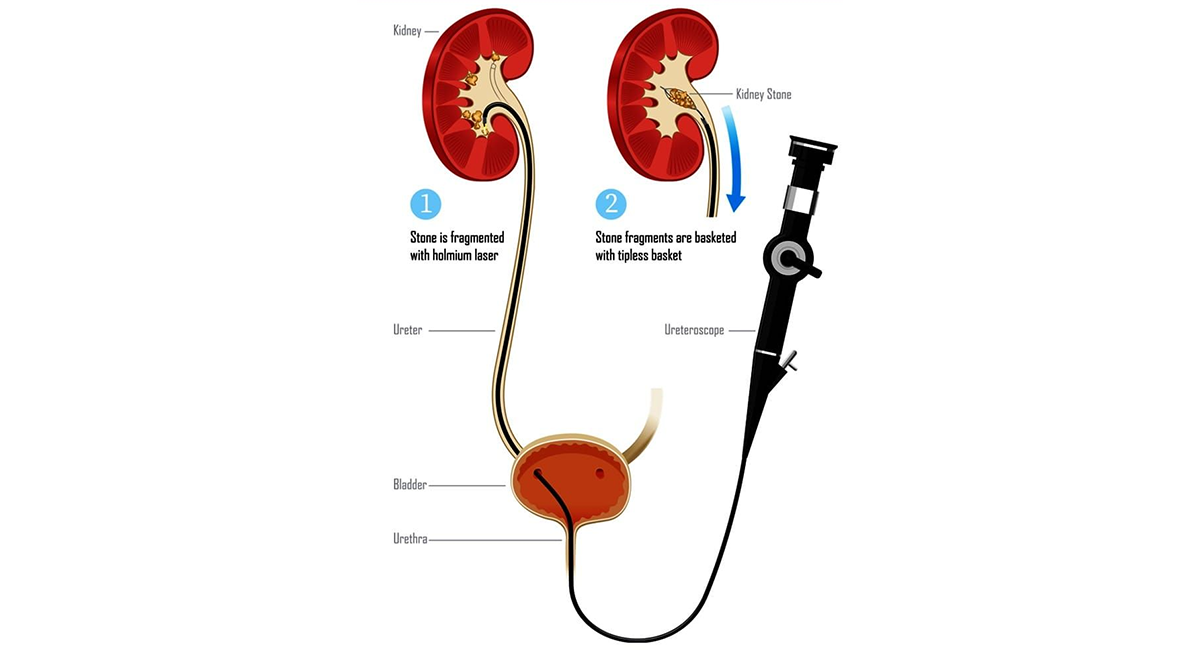
RIRS is a minimally invasive procedure to remove the stones from the kidneys; during the surgery, a type of viewing tube known as a fiberoptic endoscope that is passed through the kidney. Because the fibre-optic is flexible, it may readily bend within the renal system and can easily enter the kidney and ureter.
The tube is inserted into the ureter, which is the part of the kidney that collects urine, and it helps in the visualization of various parts of the kidney. The narrow laser fibre is then passed through the scope, which breakdown stones into extremely fine particles to make it simpler to wash out with urine or saline irrigation.
The best aspect about the procedure is that there is no need for an incision, and the patient is given general / local anaesthesia. The urologist will execute the procedure to ensure that you receive the best possible care.
RIRS (Retrograde intrarenal surgery) is a retrograde ureteroscopic technique, it is performed inside the kidney without the need for any external hole or cuts. With the use of a live X-ray, that is fluoroscopy, the device is pushed up through the urethra and then placed into the kidney. The process is minimally invasive, making it an excellent choice for treating difficult conditions.
- Kidney stones that are too large for lithotripsy.
- Kidney stones in children.
- Strictures in the kidney
- Bleeding disorders in the kidneys
- Failures in other treatment methods
- In obese patients
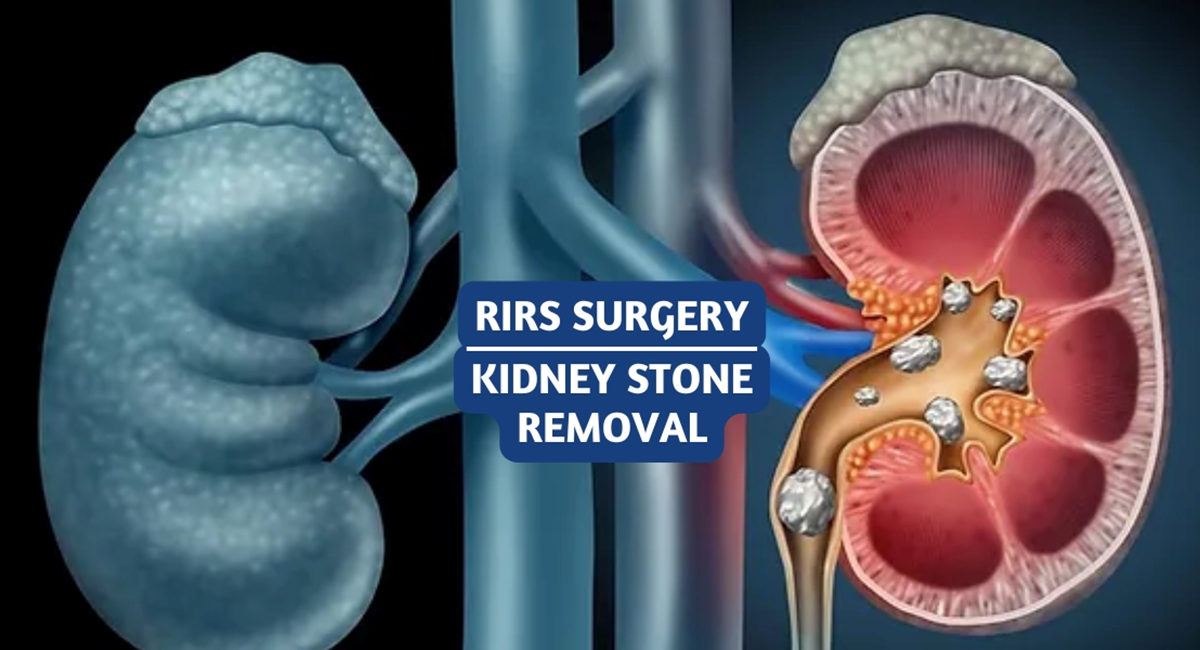
RIRS surgery is performed using a flexible ureteroscope, a specialized instrument that is inserted through the urethra, bladder, and ureter to access the kidney. No incision is made, which significantly reduces recovery time and post-operative complications.
Anesthesia: The procedure is generally performed under general anesthesia to ensure the patient is completely comfortable throughout.
Insertion of Ureteroscope: The surgeon inserts the flexible ureteroscope through the natural urinary passage (urethra) and advances it up through the bladder and ureter into the kidney.
Laser Lithotripsy: Once the ureteroscope reaches the kidney stone, a laser fiber is inserted through the scope to fragment the stones into smaller pieces that can be easily removed or passed naturally through urination.
Stone Extraction: After the stone has been fragmented, the smaller pieces are extracted with the help of basket catheters, or they are left to pass out of the body naturally.
Stent Placement: In some cases, a ureteral stent is placed to ensure smooth urine flow from the kidney to the bladder post-surgery. The stent helps the healing process and prevents any blockage from residual fragments or swelling.
The surgery generally lasts about 1 to 2 hours, depending on the size and location of the stones or the complexity of the issue being treated. Since RIRS is a minimally invasive procedure, patients can typically go home the same day or after a short hospital stay.
© 2025 Om Kidney Hospital. All Rights Reserved. Designed & Developed By: Desiration Hub.

 Appointment